MLB's Extra Innings Runner Rule Explained: Who Starts on Second?
Every extra inning starts with a runner on second base. Here is who goes out there, how it affects stats and when the rule does not apply.

Starting in the 10th inning of a regular season game, each half inning begins with a runner already on second base. Fans call it the "ghost runner" or "Manfred runner," after Commissioner Rob Manfred. It first appeared in 2020 and became a permanent rule in 2023.
How It Works
- The rule kicks in at the top of the 10th inning and applies to every extra half inning after that.
- The runner starts on second base with nobody out.
- Normal baseball rules apply from there: bunts, steals and pinch runners are all allowed.
Who the Runner Is
The runner is the player in the batting order spot immediately before the inning's scheduled leadoff hitter. In most cases that is the player who made the last out of the previous inning. Managers can send in a pinch runner, and many choose a fast bench player.
How It Affects Stats
The automatic runner is treated as if they reached base on an error:
- If the runner scores, it is an unearned run for the pitcher, so it does not raise their ERA.
- It still counts on the scoreboard and as a run allowed.
- The runner does not count as a hit or a walk.
Why MLB Adopted It
Marathon extra inning games wore down pitching staffs, sometimes for days afterward, and forced position players to pitch. The runner on second makes scoring in extra innings much more likely, so games end sooner. It also reduces injury risk from extremely long games.
Strategy Changes
The rule brought back old school small ball:
- Sacrifice bunts to move the runner to third with one out
- Intentional walks to set up double plays
- Aggressive baserunning with speedy pinch runners
Not in the Postseason
The rule is regular season only. In the playoffs, extra innings are played the traditional way, which is why October can still produce epic 15 inning games. See how the bracket works in our MLB postseason format guide.
Background from Wikipedia
Extra innings
Extra innings is the extension of a baseball or softball game in order to break a tie.
Ordinarily, a baseball game consists of nine regulation innings (in softball and high school baseball games there are typically seven innings; in Little League Baseball, six), each of which is divided into halves: the visiting team bats first, after which the home team takes its turn at bat. However, if the score remains tied at the end of the regulation number of complete innings, the rules provide that "play shall continue until
The visiting team has scored more total runs than the home team at the end of a completed inning, or
The home team scores the winning run in an uncompleted inning."
(Since the home team bats second, condition (2) does not allow the visiting team to score more runs before the end of the inning, unless the game is called before the inning ends).
Most of the rules of the game, including the batting order, availability of substitute players and pitchers, etc., remain intact in extra innings, although occasionally leagues and tournaments will place runners on base to start extra innings in order to speed up the game.
Text from Wikipedia, CC BY-SA 4.0
Frequently Asked Questions
Is the extra innings runner rule used in the MLB playoffs?
No. The automatic runner applies only in the regular season. Postseason games use traditional extra innings.
Who is the automatic runner in extra innings?
The runner is the player in the batting order spot immediately before that inning's leadoff hitter, or a pinch runner who replaces them.
Does the automatic runner count against a pitcher's ERA?
If the automatic runner scores, the run counts on the scoreboard but is treated as unearned, so it does not raise the pitcher's ERA.
Join the Conversation
Got a take? Share this story and tell us what you think. We read every reply.
Keep Reading


More to Explore
2005 Major League Baseball postseason
The 2005 Major League Baseball postseason was the playoff tournament of Major League Baseball for the 2005 season. The winners of the League Division Series would move on to the League Championship Series to determine the pennant winners that face each other in the World Series.

Shaikin: As a kid, this World Series starter rooted for the Astros. Then he learned they cheated.
Brewers World Series pitcher Logan Henderson grew up cheering for the Astros, but he reluctantly concedes their cheating scandal alters the 2017 title.
2021 Major League Baseball postseason
The 2021 Major League Baseball postseason was the playoff tournament of Major League Baseball (MLB) for the 2021 season. The winners of the Division Series advanced to the League Championship Series to determine the pennant winners that face each other in the World Series.
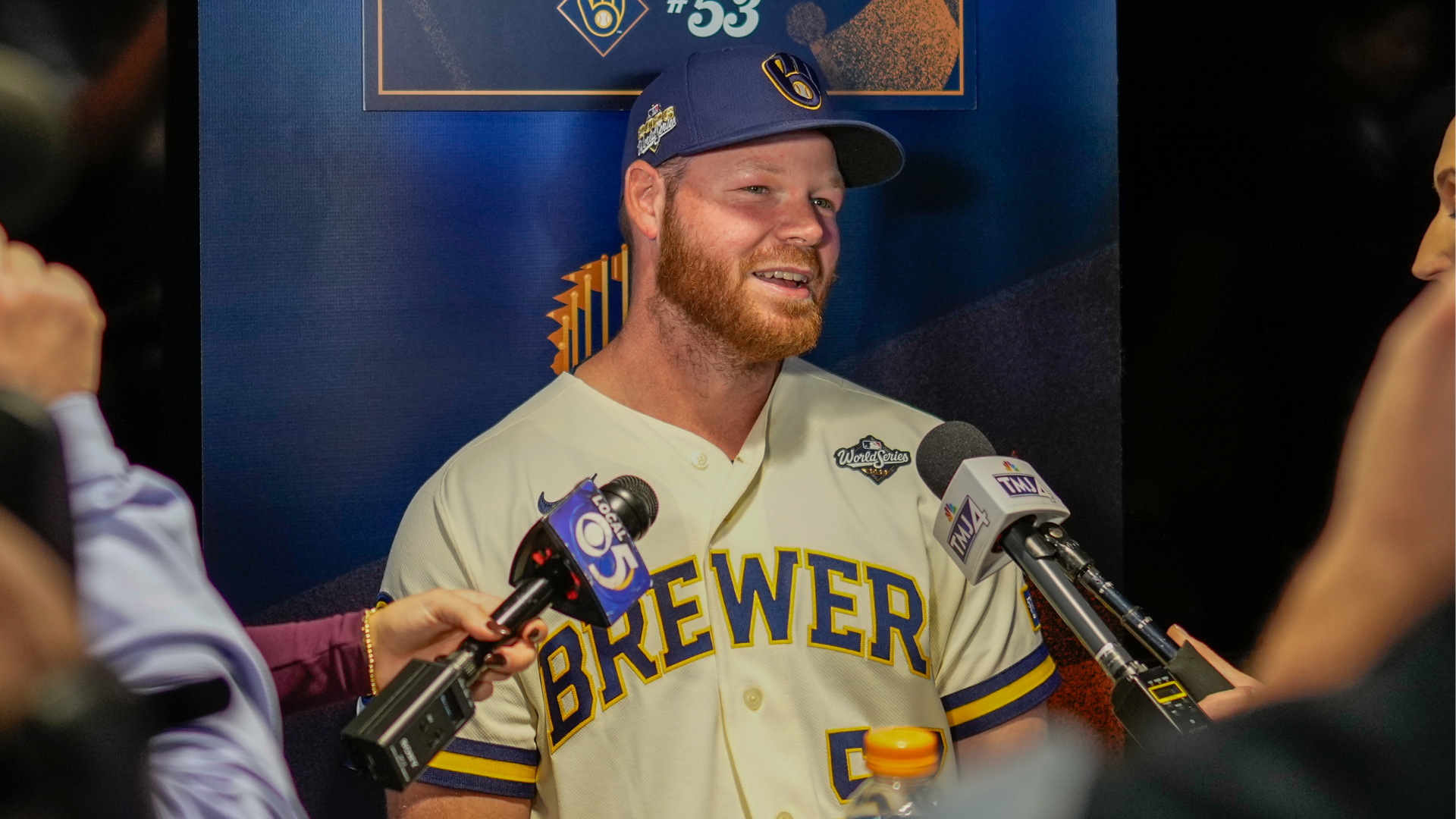
Brandon Woodruff, Brewers' longest-tenured player, makes World Series roster after long injury absence
Woodruff, who debuted with Milwaukee in 2017, hasn't pitched since July 4 due to a shoulder issue
2021 American League Division Series
The 2021 American League Division Series were the two best-of-five playoff series in Major League Baseball’s (MLB) 2021 postseason that determined the participating teams of the 2021 American League Championship Series. The three divisional winners, seeded first through third, and a fourth team—determined by the AL Wild Card Game—played in two series.
Vogt shuns Mariners rumors, says he'll manage Guardians in '27
Guardians manager Stephen Vogt dispelled speculation about his future, saying he'll return next season to chase an elusive World Series title.
2016 Major League Baseball postseason
The 2016 Major League Baseball postseason was the playoff tournament of Major League Baseball for the 2016 season. The winners of the Division Series would move on to the League Championship Series to determine the pennant winners that face each other in the World Series.
Brewers' Woodruff, out since July, added to World Series roster
Brandon Woodruff, who hasn't pitched in a game since July 4 due to a shoulder injury, took the place of Chad Patrick on the Brewers' World Series roster.
Wikipedia summaries are licensed CC BY-SA 4.0. Headlines and photos belong to their publishers.