F1 Flags and Penalties Explained: Safety Cars, Time Penalties and More
Yellow, blue, black and white, red. Here is what every F1 flag means and how stewards hand out penalties.
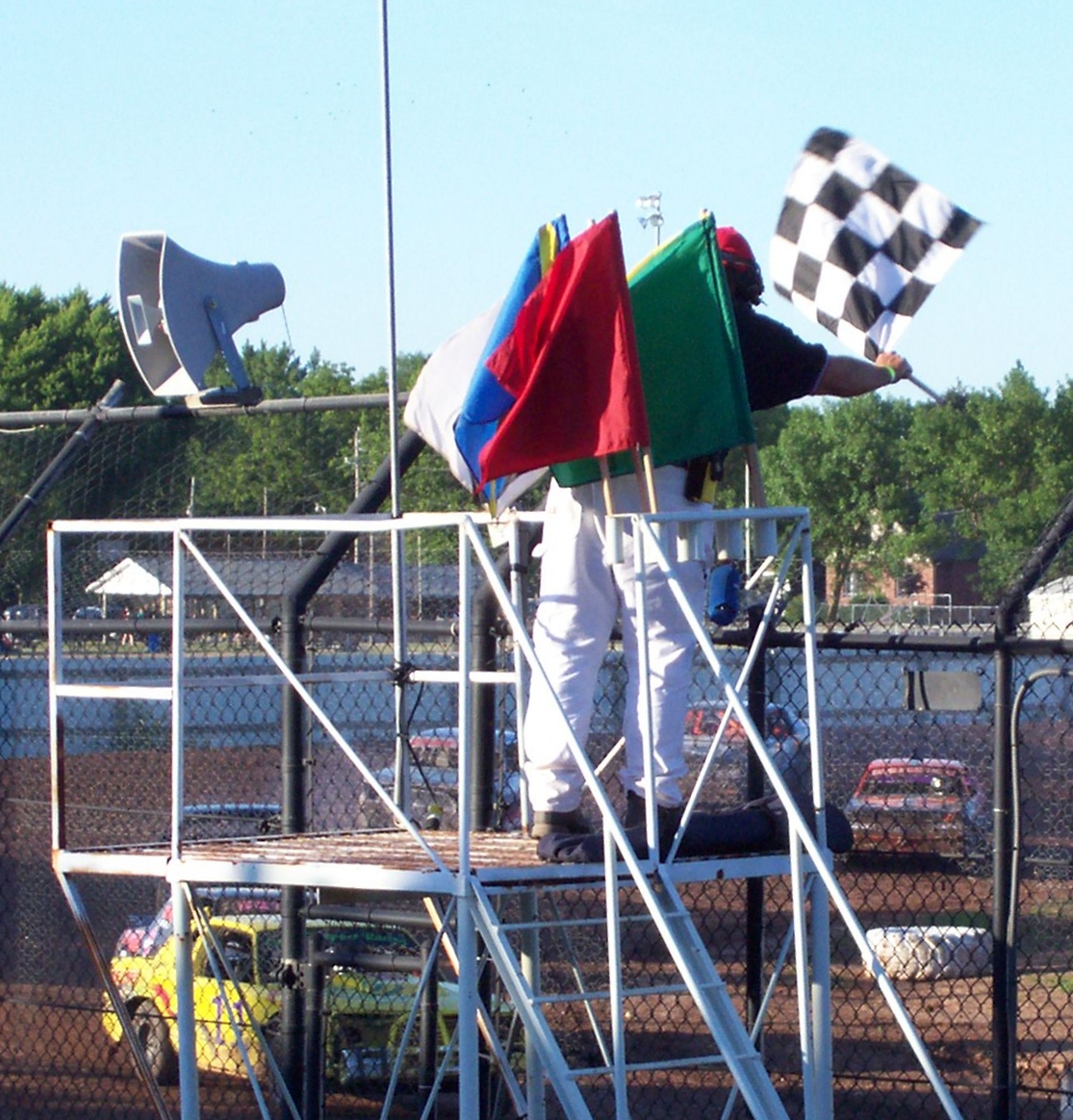
Formula 1 runs at more than 200 mph, so communication with drivers has to be instant and clear. That is the job of flags, lights and the race stewards.
The Flags
| Flag | Meaning |
|---|---|
| Green | Track is clear, racing resumes |
| Yellow | Danger ahead: slow down, no overtaking |
| Double yellow | Serious danger: be ready to stop, no overtaking |
| Red | Session stopped, return slowly to the pit lane |
| Blue | A faster car is lapping you: let it pass |
| Yellow and red stripes | Slippery surface ahead (oil, water or debris) |
| Black and white diagonal | Warning for unsporting behavior |
| Black with orange circle | Car has a mechanical problem and must pit |
| Black | Disqualified, return to the pits |
| Chequered | End of the session or race |
Safety Car
When there is a crash or debris that marshals need to clear safely, race control can deploy the Safety Car. Drivers must form a line behind it, no overtaking is allowed, and gaps between cars shrink. A well timed Safety Car can change a race because pit stops become much cheaper in time.
Virtual Safety Car (VSC)
For smaller incidents, the VSC slows everyone without bunching them up. Drivers must stay above a minimum time on each part of the lap, so the gaps stay roughly the same.
The Penalties
Stewards investigate incidents and can hand out:
- 5 or 10 second time penalty: served at a pit stop or added to the final race time
- Drive through penalty: drive through the pit lane at limited speed without stopping
- Stop and go penalty: stop in the pit box for 10 seconds with no work allowed on the car
- Grid penalty: start the next race further back
- Reprimand: a formal warning
- Disqualification: removed from the results
Teams can also be penalized, for example for unsafe pit stop releases or technical breaches.
Super Licence Penalty Points
On top of race penalties, drivers can receive penalty points on their super licence. Points stay on a licence for 12 months, and a driver who reaches 12 points gets a one race ban. It is a system designed to punish repeat offenders.
Track Limits
Drivers must keep the car within the white lines that mark the edge of the track. Repeated track limit violations lead to warnings, then time penalties, and laps set while running wide can be deleted in qualifying.
Want to see these rules in action? Check out the F1 races in the United States.
Background from Wikipedia
Racing flags
Racing flags are traditionally used in auto racing and similar motorsports to indicate track conditions and to communicate important messages to drivers. Typically, the starter, sometimes the grand marshal of a race, waves the flags atop a flag stand near the start-finish line. Track marshals are also stationed at observation posts along the race track in order to communicate both local and course-wide conditions to drivers. Alternatively, some race tracks employ lights to supplement the primary flag at the start-finish line.
Text from Wikipedia, CC BY-SA 4.0
Frequently Asked Questions
What does a blue flag mean in F1?
A blue flag tells a driver that a faster car is about to lap them and they must let it pass. Ignoring blue flags leads to a penalty.
What is the difference between a Safety Car and a Virtual Safety Car?
A Safety Car is a real car that leads the field at reduced speed. Under a Virtual Safety Car, there is no physical car, and drivers must stay above a minimum time on each section of the lap, slowing everyone equally.
How many penalty points lead to a race ban in F1?
A driver who collects 12 penalty points on their super licence within 12 months receives a one race ban.
Join the Conversation
Got a take? Share this story and tell us what you think. We read every reply.
Keep Reading


More to Explore
NASCAR rules and regulations
The National Association for Stock Car Auto Racing (NASCAR) makes and enforces numerous rules and regulations that transcend all racing series. NASCAR issues a different rule book for each racing series; however, rule books are published exclusively for NASCAR members and are not made available to the public.
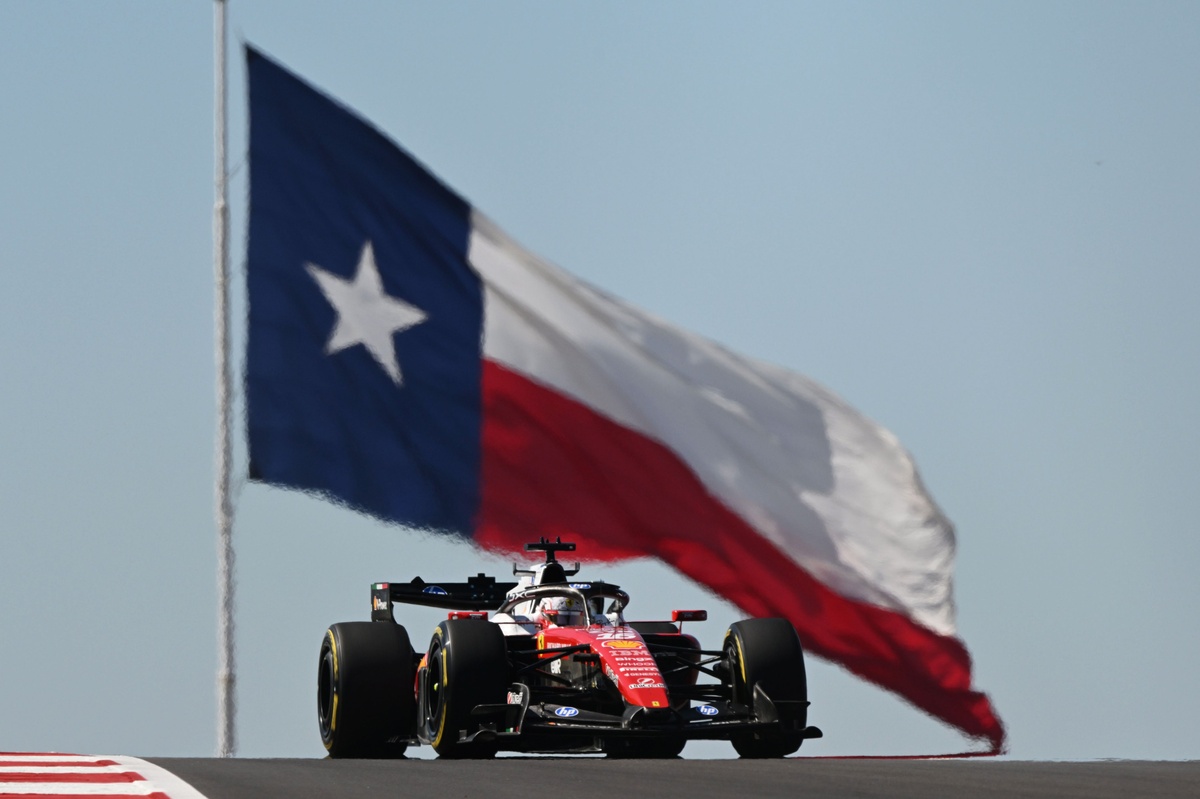
F1 United States GP: Leclerc pips Antonelli to top FP2 while McLaren struggles
Ferrari's Charles Leclerc has led the way in Friday practice for Formula 1's United States Grand Prix, narrowly beating Kimi Antonelli to the top spot in Austin as McLaren struggled for grip. Leclerc set a 1m35.291s…

Rolling start
A rolling start is one of two modes of initiating or restarting an auto race; the other mode is the standing start. In a rolling start, the cars are ordered on the track and are led on a certain number of laps (parade or caution laps) at a predetermined safe speed by the safety car.
Kimi Antonelli rookie card sells for staggering $878,400 ahead of F1 title opportunity
A one-of-a-kind Kimi Antonelli rookie card has sold for $878,400 at auction, making it the second most expensive Formula 1 card ever sold, just days before the Mercedes driver could become world champion. The card, a…
Green–white–checkered finish
In North American auto racing, a green–white–checker finish (GWC) is a racing restart procedure in which the race is restarted from a caution period with 2 laps remaining. When the race distance is extended to accommodate such a finish, it is also sometimes known as an overtime finish.
McLaren drivers 'still allowed to race' each other – Norris
Lando Norris has offered an update on McLaren's intra-team orders ahead of the United States Grand Prix, after the reigning World Champion and team mate Oscar Piastri collided at the previous round in Singapore.

Indianapolis 500 pace cars
The Indianapolis 500 auto race has used a pace car every year since 1911. The pace car is utilized for two primary purposes.
Verstappen warns 'out of control' COTA bumps
Max Verstappen has said Formula 1 drivers risk long-term damage from venues with "out of control" bumps like Austin's Circuit of the Americas (COTA), citing a concerning recent X-ray he's seen of his own back.
Wikipedia summaries are licensed CC BY-SA 4.0. Headlines and photos belong to their publishers.