How the F1 Points System Works: Races, Sprints and Championships
Twenty-five for a win, eight for a sprint victory and nothing for fastest lap anymore. Here is how F1 scoring really works.

Formula 1 crowns two champions every year: the best driver and the best team. Both titles are decided by the same simple points system, with a few twists that are worth knowing.
Grand Prix Points
The top 10 finishers in every Grand Prix score points:
| Position | Points |
|---|---|
| 1st | 25 |
| 2nd | 18 |
| 3rd | 15 |
| 4th | 12 |
| 5th | 10 |
| 6th | 8 |
| 7th | 6 |
| 8th | 4 |
| 9th | 2 |
| 10th | 1 |
Finishing 11th or lower earns nothing, which is why the battle for 10th place can be surprisingly fierce for midfield teams.
No More Fastest Lap Point
From 2019 through 2024, a driver who set the fastest lap and finished in the top 10 earned a bonus point. That rule was scrapped starting in 2025, partly because teams were making late, low-risk pit stops purely to chase the point.
Sprint Race Points
On sprint weekends, a shorter Saturday race also pays points. The top eight score:
8, 7, 6, 5, 4, 3, 2, 1
Sprints are worth far less than a Grand Prix, but over a season they can swing a close championship.
The Drivers' Championship
A driver's season total is simply the sum of every race and sprint result. The driver with the most points after the final round is World Champion.
The Constructors' Championship
Both of a team's cars score for the Constructors' Championship. That means a team with two consistent drivers can beat a team with one superstar. The constructors' standings also determine how prize money is split, so it matters enormously to every team on the grid.
What If Points Are Tied?
Ties are broken by countback: the driver or team with more wins comes out ahead. If that is equal, F1 compares second place finishes, then thirds, and so on.
Shortened Races
If a race is stopped and cannot be completed, for example because of heavy rain, reduced points are awarded on a sliding scale based on how much of the race distance was completed. If too little racing happens, no points are given at all.
Why It Matters
Under this system, consistency wins titles. A driver who finishes second every weekend can beat a rival who wins half the races but crashes out of the rest. Keep that in mind when you watch the 2026 cars battle through the season.
Background from Wikipedia
List of Formula One points systems
Formula One (F1) is the highest class of open-wheeled auto racing series administered by the Fédération Internationale de l'Automobile (FIA), motorsport's world governing body. The "formula" in the name alludes to a series of rules set by the FIA to which all participants and vehicles are required to conform. The F1 World Championship season consists of a series of races, known as Grands Prix, usually held on purpose-built circuits, and in a few cases on closed city streets. A points scoring system is used for each Grand Prix held over the course of the F1 season to determine the outcome of two annual championships, one for drivers (World Drivers' Championship) since 1950, and one for constructors (World Constructors' Championship) since 1958.
Text from Wikipedia, CC BY-SA 4.0
Frequently Asked Questions
How many points does an F1 race winner get?
The winner of a Grand Prix earns 25 points. Points are awarded down to 10th place, which earns 1 point.
Is there still a point for fastest lap in F1?
No. The bonus point for fastest lap was dropped starting with the 2025 season.
How are F1 sprint points awarded?
The top eight finishers in a sprint score points, from 8 points for the winner down to 1 point for eighth place.
Join the Conversation
Got a take? Share this story and tell us what you think. We read every reply.
Keep Reading



More to Explore

2022 Japanese Grand Prix
The 2022 Japanese Grand Prix (officially known as the Formula 1 Honda Japanese Grand Prix 2022) was a Formula One motor race held on 9 October 2022 at the Suzuka International Racing Course in Suzuka, Japan. Max Verstappen won the race finishing first, in front of Sergio Pérez and Charles Leclerc.
Hamilton hints at staying in F1 to race in Africa
Lewis Hamilton joked that he may have to keep racing until he's at least 45 years old now Formula 1 has confirmed a African Grand Prix in Rwanda will happen in the 2030s.

2022 Abu Dhabi Grand Prix
The 2022 Abu Dhabi Grand Prix (officially known as the Formula 1 Etihad Airways Abu Dhabi Grand Prix 2022) was a Formula One motor race that was held on 20 November 2022 at the Yas Marina Circuit in Abu Dhabi, United Arab Emirates. Max Verstappen won the race ahead of Charles Leclerc and Sergio Pérez.
Leclerc tops second practice at United States GP
Charles Leclerc topped the timesheets again during the second practice session at the United Grand Prix on Friday, as Ferrari continued to show promising signs with its new upgrades.
List of Formula One driver records
The World Championship of Drivers has been held since 1950. Driver records listed here include all rounds which formed part of the World Championship since 1950: this includes the Indianapolis 500 from 1950–1960 (although it was not run to Formula One rules), and the 1952 and 1953 World Championship Grands Prix (which were run to Formula Two rules).
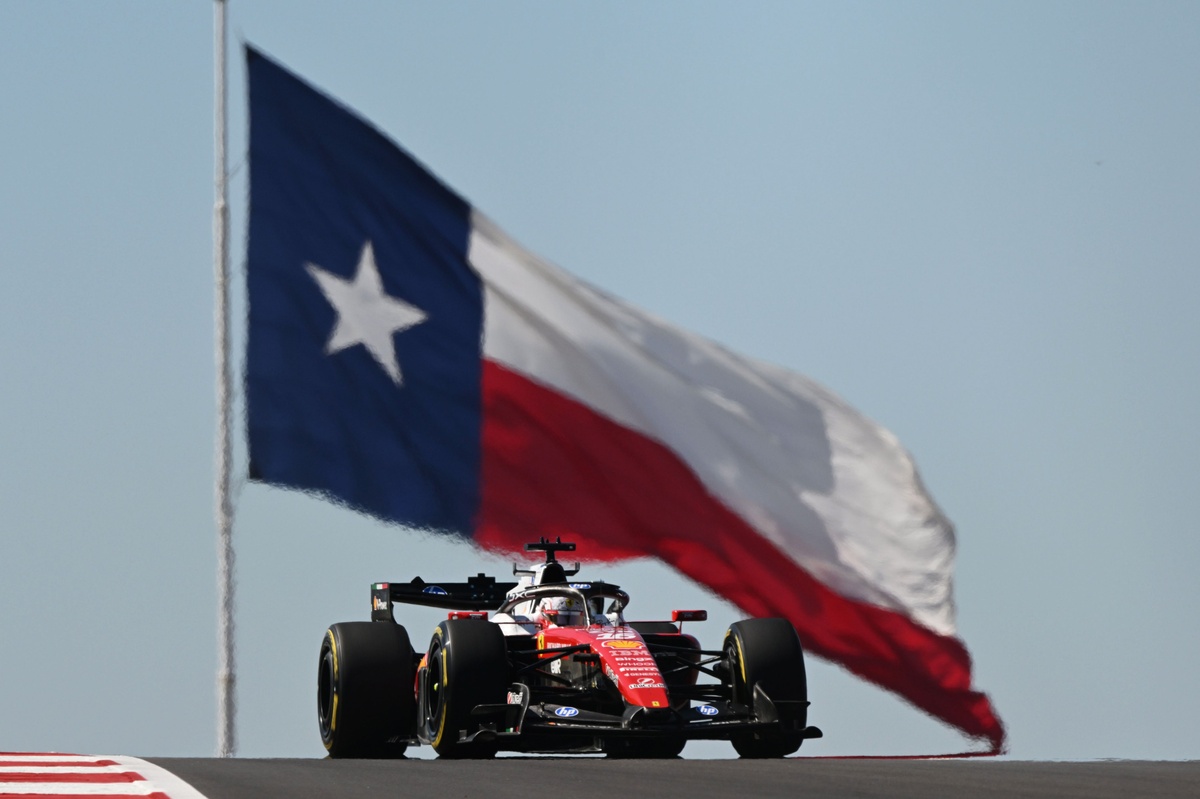
F1 United States GP: Leclerc pips Antonelli to top FP2 while McLaren struggles
Ferrari's Charles Leclerc has led the way in Friday practice for Formula 1's United States Grand Prix, narrowly beating Kimi Antonelli to the top spot in Austin as McLaren struggled for grip. Leclerc set a 1m35.291s…

Max Verstappen
Max Emilian Verstappen (Dutch pronunciation: [ˈmɑks fɛrˈstɑpə(n)]; born 30 September 1997) is a Dutch and Belgian racing driver who competes under the Dutch flag in Formula One for Red Bull Racing. Verstappen has won four Formula One World Drivers' Championship titles, which he won consecutively from 2021 to 2024 with Red Bull, and has won 73 Grands Prix across 12 seasons.
Verstappen warns 'out of control' COTA bumps
Max Verstappen has said Formula 1 drivers risk long-term damage from venues with "out of control" bumps like Austin's Circuit of the Americas (COTA), citing a concerning recent X-ray he's seen of his own back.
Wikipedia summaries are licensed CC BY-SA 4.0. Headlines and photos belong to their publishers.