Infield Fly Rule and Balk Explained: Baseball's Two Most Confusing Rules
An out on a ball nobody caught, and a free base for a pitcher's twitch. Here is how baseball's infield fly rule and the balk actually work.
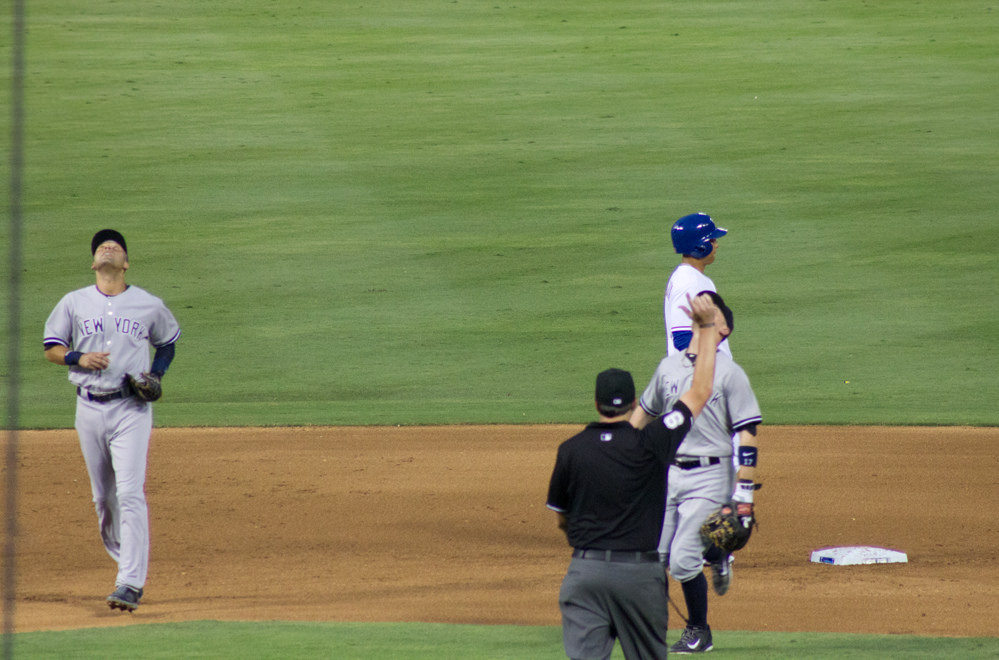
Baseball's rulebook is full of oddities, but two rules confuse fans more than any others: the infield fly rule, which makes a batter out on a ball nobody caught, and the balk, which gives runners a free base when the pitcher flinches. Here is how both work.
The Infield Fly Rule
The infield fly rule says the batter is automatically out on certain pop-ups, even if the ball is dropped. It applies when all of these are true:
- There are fewer than two outs.
- Runners are on first and second, or the bases are loaded.
- The batter hits a fair fly ball (not a line drive or a bunt).
- An infielder can catch it with ordinary effort.
The umpire signals by pointing up and calling "Infield fly, batter's out." If the ball is near a foul line, the call is "Infield fly, if fair."
Why the Rule Exists
Without it, an infielder could let an easy pop-up drop on purpose. The runners, who had to stay near their bases in case of a catch, would then be forced to run, and the defense could turn an easy double or triple play. The rule protects the offense from that trick.
What Runners Can Do
The ball is still live. Runners can advance at their own risk, exactly as on any caught fly ball: if the ball is caught, they must tag up first.
The Balk
A balk is an illegal motion by the pitcher with runners on base. The rules exist to stop pitchers from deceiving baserunners about whether they are throwing home or trying a pickoff.
Common Balks
- Starting the pitching motion and stopping without throwing
- Not coming to a complete stop in the set position before pitching
- Faking a throw to first base while touching the rubber
- Throwing to a base without stepping toward it first
- Dropping the ball while on the rubber
- Pitching while not facing the batter
What Happens After a Balk
Every runner is awarded one base, and a runner on third scores. If the pitcher still delivers the pitch and the batter reaches base safely, with every runner also advancing at least one base, the play stands and the balk is ignored. Otherwise the balk is enforced.
Balks and the Pitch Clock
The pitch clock era limits how often a pitcher can step off or throw over to a base in a single plate appearance. Going past the limit without getting the runner out counts as a balk. Learn more in our MLB pitch clock rules explained.
Keep Reading
Make sense of every number in the paper with how to read a baseball box score, and follow the season on our baseball news page.
Background from Wikipedia
Infield fly rule
The infield fly rule is a rule of baseball and softball that treats certain fly balls as though caught, before the ball is caught, even if the infielder fails to catch it or drops it on purpose. The umpire's declaration of an infield fly means that the batter is out (and all force plays are removed) regardless of whether the ball is caught. The rule exists solely to prevent the defense from executing a double play or triple play by deliberately failing to catch a ball that an infielder could catch with ordinary effort.
Text from Wikipedia, CC BY-SA 4.0
Frequently Asked Questions
When is the infield fly rule called?
With fewer than two outs and runners on first and second, or the bases loaded, when the batter hits a fair fly ball that an infielder can catch with ordinary effort. The batter is out even if the ball is dropped.
Why does the infield fly rule exist?
To stop infielders from dropping an easy pop-up on purpose to start a double or triple play against runners who had to stay near their bases.
What is a balk in baseball?
A balk is an illegal motion by the pitcher with runners on base, designed to deceive them. When a balk is called, every runner advances one base.
Can the batter be called for a balk?
No. Only the pitcher can commit a balk, and only when there are runners on base.
Sources & Official Resources
Rules, schedules and statistics in this article are checked against these official sources. See our editorial policy for how we fact-check.
Join the Conversation
Got a take? Share this story and tell us what you think. We read every reply.
Keep Reading


More to Explore

Out (baseball)
In baseball, an out occurs when the umpire rules a batter or baserunner out. When a batter or runner is out, they lose their ability to score a run and must return to the dugout until their next turn at bat.

Rocco Baldelli Withdraws Name From Mariners’ Managerial Search
Rocco Baldelli was a candidate to be the Mariners’ next manager, but the former Twins skipper has removed himself from the search due to “family considerations,” The Athletic’s Ken Rosenthal reports. The news leaves…

Rules of baseball
Throughout the history of baseball, the rules of the game have changed frequently as the game continues to evolve. A few typical rules that most professional leagues have in common are that four balls are a base on balls, three strikes are a strikeout, and three outs end a half-inning.

Hideki Matsui hired as manager of Japan's Yomiuri Giants
Former New York Yankees slugger Hideki Matsui was named Friday as the new manager of the Yomiuri Giants, his club until his departure for the United States.

Hit (baseball)
In baseball statistics, a hit (denoted by H), also called a base hit, is credited to a batter when the batter safely reaches or passes first base after hitting the ball into fair territory with neither the benefit of an error nor a fielder's choice.

Interference (baseball)
In baseball, interference occurs in situations in which a person illegally changes the course of play from what is expected. Interference might be committed by players on the offense, players not currently in the game, catchers, umpires, or spectators.

Manfred: Small-market World Series good for game, but cap still needed
MLB commissioner Rob Manfred said a Rays-Brewers World Series is good for the game but stressed that small markets can't compete on a regular basis without a cap.
Wikipedia summaries are licensed CC BY-SA 4.0. Headlines and photos belong to their publishers.