NHL Playoff Format Explained: How 16 Teams Chase the Stanley Cup
Sixteen teams, four rounds and best-of-seven series all the way. Here is how the NHL playoff format decides who lifts the Stanley Cup.

The Stanley Cup playoffs are often called the hardest tournament in sports to win: four rounds, up to 28 games and two months of physical, high-stakes hockey. Here is how the NHL playoff format works, from qualifying to the Stanley Cup Final.
How Many Teams Make the Playoffs?
Sixteen of the NHL's 32 teams make the playoffs, eight from each conference. The league is split into:
- Eastern Conference: Atlantic and Metropolitan divisions
- Western Conference: Central and Pacific divisions
How Teams Qualify
The playoff field is built from the regular-season standings, where teams earn 2 points for a win and 1 point for an overtime or shootout loss.
In each conference:
- The top three teams in each division qualify automatically. That is six teams.
- The two wild cards go to the next two best teams in the conference, no matter which division they play in.
How the Bracket Works
The NHL uses a divisional bracket, so early rounds are built around rivals:
- The division winner with the better record plays the second wild card.
- The other division winner plays the first wild card.
- In each division, the second-place team plays the third-place team.
The winners meet within their side of the bracket in Round 2. That is why playoff hockey often means rematches with nearby rivals.
The Four Rounds
- First Round
- Second Round
- Conference Finals, crowning the Eastern and Western Conference champions
- Stanley Cup Final
Every round is a best-of-seven series. The first team to four wins advances.
Home-Ice Advantage
The team with the better regular-season record gets home-ice advantage in each series. The higher seed hosts games 1, 2, 5 and 7, and the lower seed hosts games 3, 4 and 6. Home ice matters: the home team gets the last line change, a real tactical edge.
Playoff Overtime Rules
Playoff overtime is different from the regular season:
- No shootouts and no 3-on-3
- Overtime periods are full 20-minute, 5-on-5, sudden-death periods
- Teams keep playing extra periods until someone scores
That is how the playoffs produce famous double- and triple-overtime marathons.
The Prize: The Stanley Cup
The winner lifts the Stanley Cup, the oldest trophy in North American professional sports. Each member of the winning team gets a day with the Cup, and the players' names are engraved on it.
Keep Reading
Get up to speed on two rules that shape every playoff game in our guide to icing and offside in hockey, and follow the race on our NHL news page.
Background from Wikipedia
Stanley Cup playoffs
The Stanley Cup playoffs (French: Les séries éliminatoires de la Coupe Stanley) is the annual elimination tournament to determine the winner of the Stanley Cup, and the league champion of the National Hockey League (NHL). The four-round, best-of-seven tournament is held after the NHL's regular season. Eight teams from each of the league's two conferences qualify for the playoffs based on regular season points totals. The final round is known as the Stanley Cup Final, which matches the two conference champions.
Text from Wikipedia, CC BY-SA 4.0
Frequently Asked Questions
How many teams make the NHL playoffs?
Sixteen teams make the NHL playoffs: eight from the Eastern Conference and eight from the Western Conference.
How does the NHL wild card work?
In each conference, the top three teams in each of the two divisions qualify. The two remaining spots go to the next two best teams in the conference, regardless of division. Those are the wild cards.
Are all NHL playoff rounds best-of-seven?
Yes. Every round of the Stanley Cup playoffs, including the Stanley Cup Final, is a best-of-seven series. The first team to win four games advances.
Is there sudden-death overtime in the NHL playoffs?
Yes. Playoff games have no shootouts. Teams play full 20-minute sudden-death overtime periods until someone scores.
Sources & Official Resources
Rules, schedules and statistics in this article are checked against these official sources. See our editorial policy for how we fact-check.
Join the Conversation
Got a take? Share this story and tell us what you think. We read every reply.
Keep Reading


More to Explore
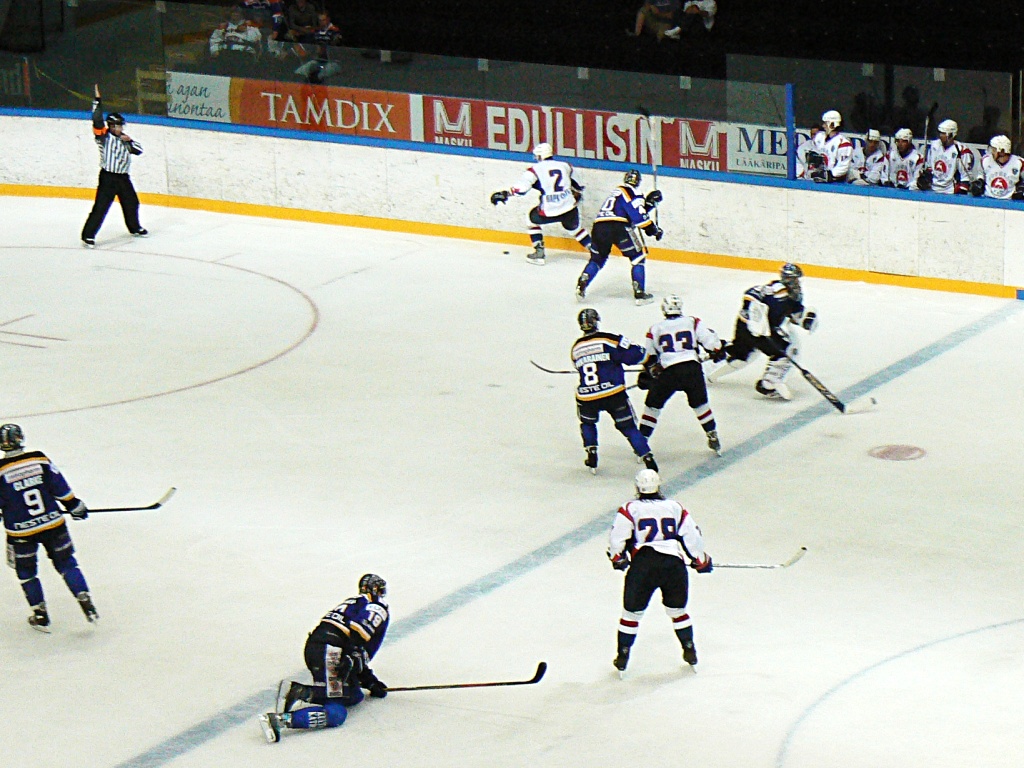
1977–78 NHL season
The 1977–78 NHL season was the 61st season of the National Hockey League. The Montreal Canadiens won their third Stanley Cup in a row, defeating the Boston Bruins four games to two in the Stanley Cup Finals.
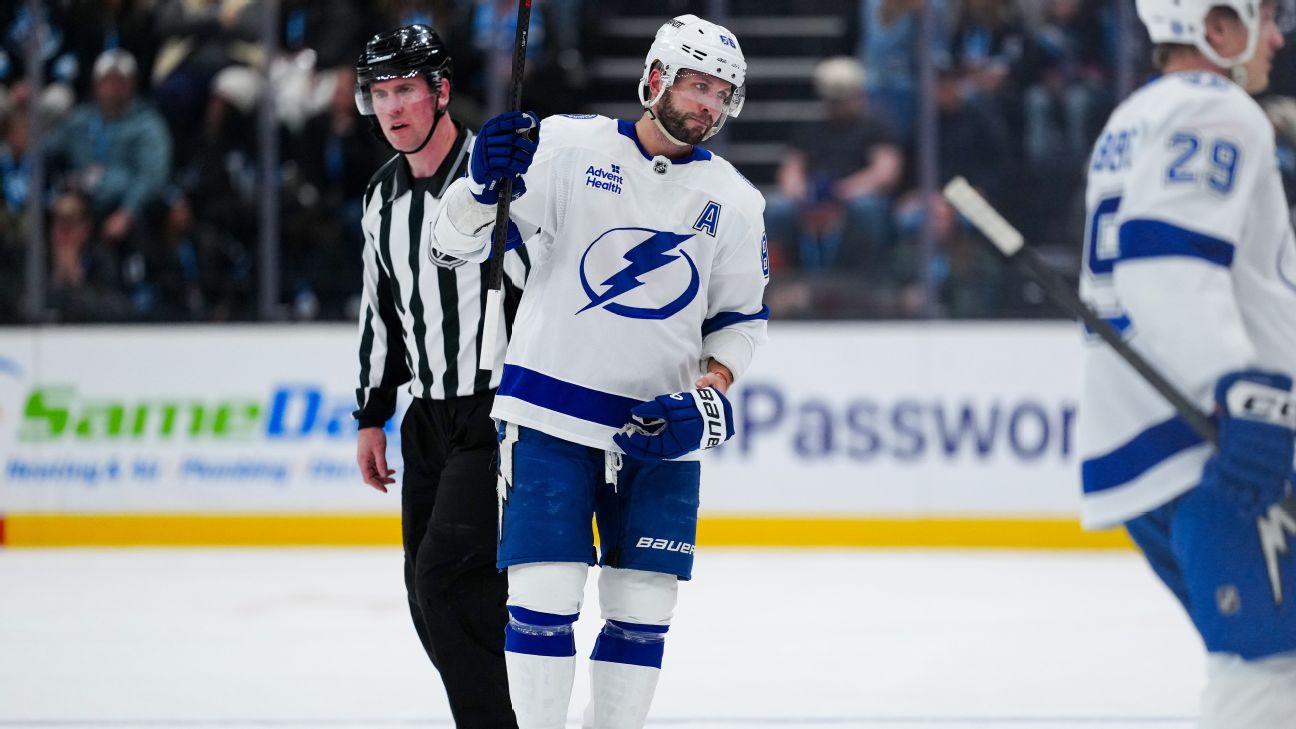
Kucherov passes Stamkos to become Lightning's career points leader
Nikita Kucherov became the Lightning's career points leader with an assist in the first period against the Mammoth.
Stanley Cup Final
The Stanley Cup Final in ice hockey (also known as the Stanley Cup Finals; French: Finale de la Coupe Stanley) is the annual championship series of the National Hockey League (NHL). The winner is awarded the Stanley Cup, North America's oldest professional sports trophy, and one of the "most important championships available to the sport [of ice hockey]" according to the International Ice Hockey Federation.
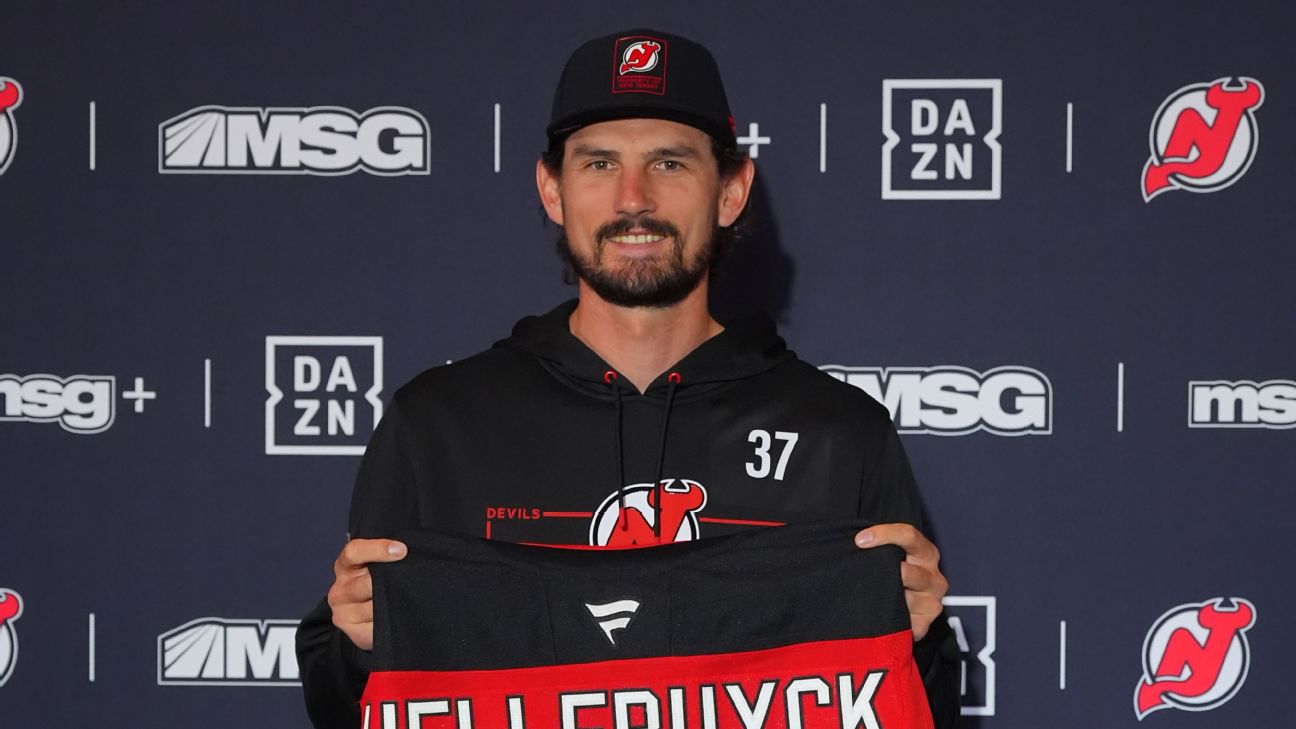
Hellebuyck happy for deal with the Devils: Sitting at home 'was getting to me'
Saying that "sitting at home for so long was getting to me," new Devils goaltender Connor Hellebuyck expressed his eagerness to play for New Jersey.

2000 Stanley Cup playoffs
The 2000 Stanley Cup playoffs, was the playoff tournament of the National Hockey League (NHL), that began on April 12, 2000, and concluded on June 10. The New Jersey Devils defeated the reigning champion Dallas Stars in a six-game series to win their second Stanley Cup title in franchise history.
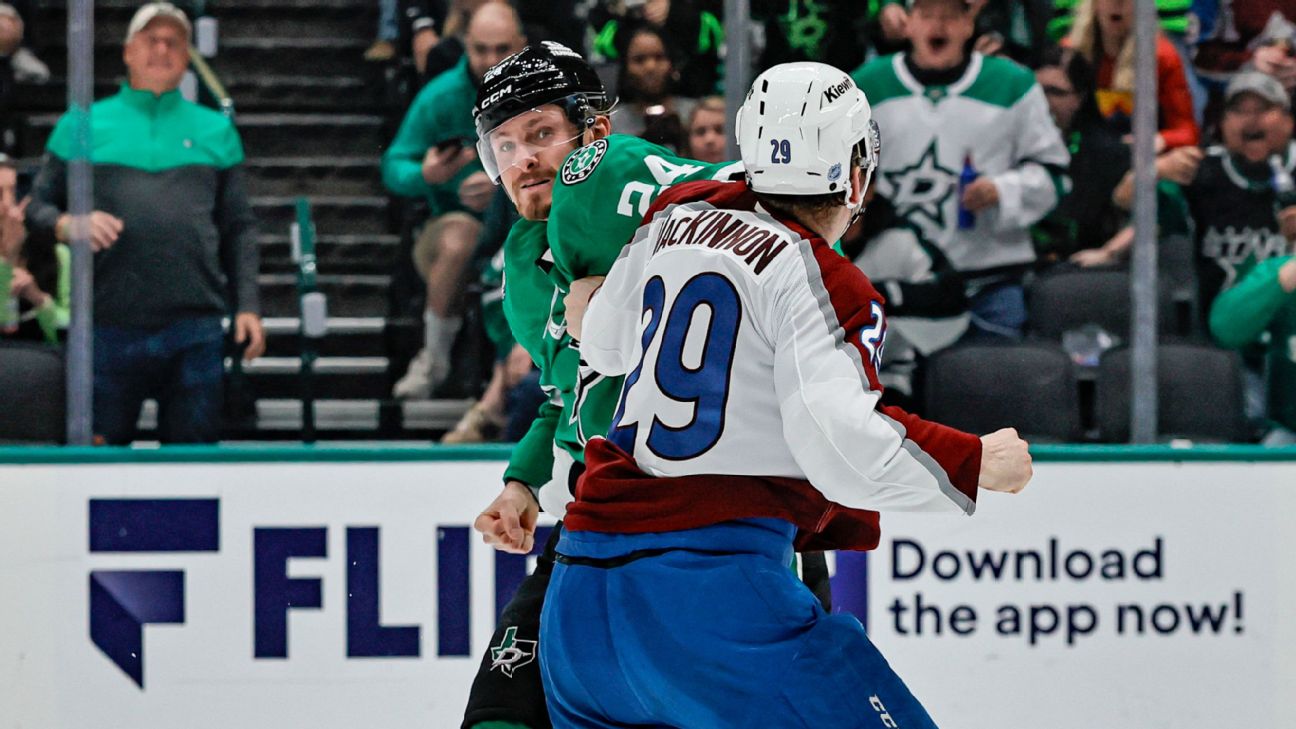
👊 Why NHL fighting is up -- and getting noticed
Through 120 games, there were 34 games with one or more fights, up over the last two seasons (25 and 26).
1998 Stanley Cup playoffs
The 1998 Stanley Cup playoffs, the playoff tournament of the National Hockey League (NHL), began on April 22, 1998 following the 1997–98 regular season. The sixteen teams that qualified, eight from each conference, played best-of-7 series for conference quarterfinals, semifinals and championships, and then the conference champions played a best-of-7 series for the Stanley Cup.

Former Canucks captain Quinn Hughes booed in Vancouver return with Wild
VANCOUVER, British Columbia (AP) — A chorus of boos echoed through Rogers Arena as Quinn Hughes stepped on the ice for warmups Sunday night.The former Vancouver captain was back for the first time since being traded to…
Wikipedia summaries are licensed CC BY-SA 4.0. Headlines and photos belong to their publishers.