Icing and Offside in Hockey Explained: The Two NHL Rules Every Fan Should Know
Icing and offside stop more NHL plays than anything else. Here is what each rule means, when it is called and how it changes the way teams play.
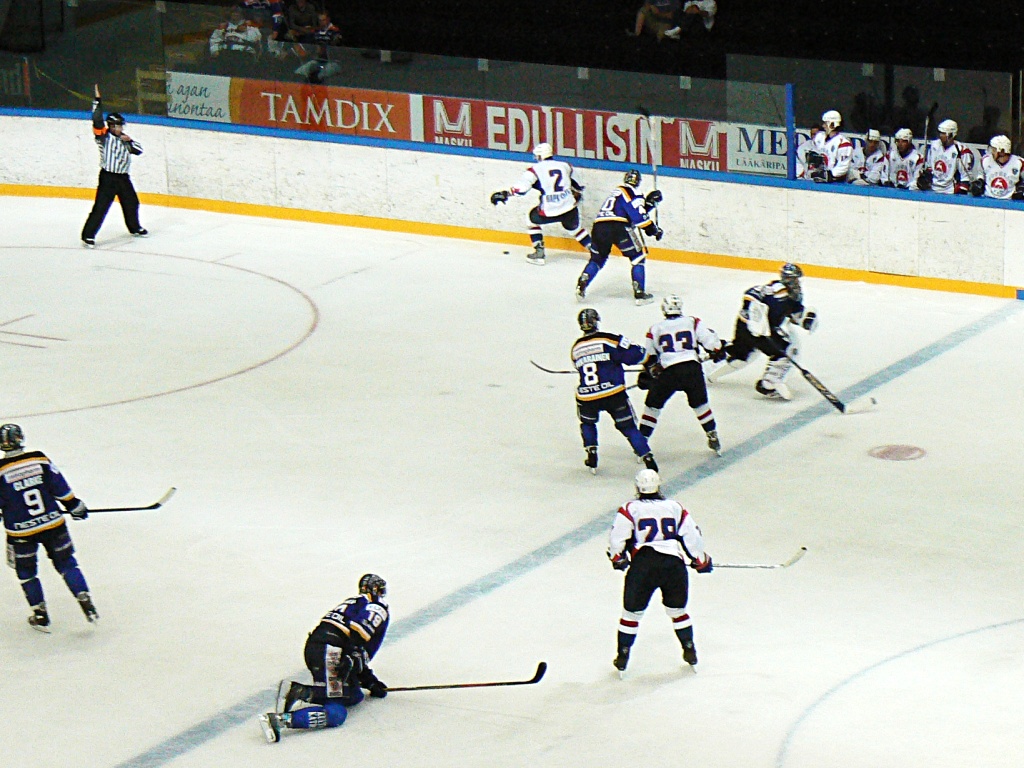
If you are new to hockey, two whistles will confuse you more than any others: icing and offside. Both stop play, both send the faceoff somewhere new, and both shape how NHL teams attack and defend. Here is what each rule means in plain English.
The Lines That Matter
An NHL rink has three key lines:
- The center red line, which splits the ice in half
- Two blue lines, which mark the edges of each offensive zone
- Two goal lines, the red lines the goals sit on
Icing is about the red lines. Offside is about the blue lines.
What Is Icing?
Icing is called when a player shoots the puck from their own side of the center red line all the way across the opponent's goal line, and no one touches it.
The rule stops teams from simply firing the puck down the ice whenever they are under pressure.
What Happens After Icing
- Play stops and the faceoff moves to the offending team's defensive zone, right next to its own net.
- The team that iced the puck cannot change players before that faceoff, so tired skaters must stay on the ice.
That second rule is the real punishment: a tired line pinned in its own end often leads to a goal against.
When Icing Is Not Called
- Shorthanded teams can ice the puck legally while killing a penalty.
- If the puck goes into the goal crease or is playable by a defender who chooses not to play it, the linesman can wave it off.
- If the goalie leaves the crease to play the puck, icing is cancelled.
Hybrid Icing
The NHL uses hybrid icing. When the puck crosses the goal line, the linesman judges which player would win the race to the puck, using the faceoff dots as the reference. If the defender would win, icing is called right away. If the attacker would win, play continues. The rule exists to prevent dangerous high-speed collisions into the end boards.
What Is Offside?
A team is offside when an attacking player crosses the opponent's blue line into the offensive zone before the puck does.
What counts is the position of the player's skates: a player is onside as long as at least one skate is touching the blue line, or still on the neutral-zone side, when the puck fully crosses the line.
When offside is called, play stops and a faceoff is held just outside the offensive zone.
Delayed Offside
If an attacker is offside but the defending team gains control of the puck, the linesman raises an arm for a delayed offside. The attackers must all tag up, meaning get back to the blue line, before they can play the puck in the zone. If an attacker touches the puck first, the whistle blows.
Offside Challenges
Coaches can use a coach's challenge when a goal is scored after a possible offside. Video review checks whether a player entered the zone early. If the challenge fails, the challenging team is charged a two-minute penalty, so coaches only challenge when they are confident.
Why These Rules Matter
Icing and offside keep hockey fast and fair:
- Icing forces defenders to skate or pass the puck out, rather than dump it the length of the ice.
- Offside stops attackers from waiting near the net for a long pass.
Watch for both and you will start to see why teams carry the puck over the blue line, why tired players take the ice after an icing call, and why some breakaways are whistled dead.
Keep Reading
See how teams qualify for the Stanley Cup in our NHL playoff format explained, and follow the season on our NHL news page.
Background from Wikipedia
Icing (ice hockey)
In ice hockey, icing is an infraction that occurs when a player shoots, bats, or deflects the puck from their own half (over the center red line) of the ice, beyond the opposing team's goal line, without scoring a goal.
The icing rule has three variations: touch icing, no-touch (also called automatic icing), and hybrid icing. Many professional leagues use hybrid icing, while many amateur leagues worldwide use no-touch or automatic icing.
Text from Wikipedia, CC BY-SA 4.0
Frequently Asked Questions
What is icing in hockey?
Icing is called when a team shoots the puck from its own side of the center red line all the way past the opponent's goal line without anyone touching it. Play stops and the faceoff goes back to the offending team's end.
Is icing called when a team is shorthanded?
No. A team killing a penalty is allowed to ice the puck, so icing is waved off when the offending team is shorthanded.
What is offside in hockey?
A team is offside when an attacking player crosses the opponent's blue line into the offensive zone before the puck does. Play stops and a faceoff is held outside the zone.
What is a delayed offside?
When an attacker is offside but the defending team has the puck, the linesman raises an arm and waits. The attackers must all leave the zone, or tag up at the blue line, before the play can continue.
Sources & Official Resources
Rules, schedules and statistics in this article are checked against these official sources. See our editorial policy for how we fact-check.
Join the Conversation
Got a take? Share this story and tell us what you think. We read every reply.
Keep Reading


More to Explore

Official (ice hockey)
In ice hockey, an official is a person who has some responsibility for enforcing the rules and maintaining the order of the game. There are two categories of officials, on-ice officials, who are the referees and linesmen who enforce the rules during gameplay, and off-ice officials, who have an administrative role rather than an enforcement role.

Former Canucks captain Quinn Hughes booed in Vancouver return with Wild
VANCOUVER, British Columbia (AP) — A chorus of boos echoed through Rogers Arena as Quinn Hughes stepped on the ice for warmups Sunday night.The former Vancouver captain was back for the first time since being traded to…

Penalty (ice hockey)
A penalty in ice hockey is a punishment for an infringement of the rules. Most penalties are enforced by sending the offending player to a penalty box for a set number of minutes.

Quinn Hughes has a goal and an assist in his Vancouver return in Wild's 4-2 victory
VANCOUVER, British Columbia (AP) — Former Vancouver captain Quinn Hughes had a goal to reach 500 NHL points and added an assist in his return to Rogers Arena in the Minnesota Wild’s 4-2 victory over the Canucks on…
Hockey Canada Officiating Program
The Hockey Canada Officiating Program (sometimes abbreviated HCOP or less commonly CHOP) is the governing body for on-ice officials for all ice hockey games played under the jurisdiction of Hockey Canada. The Hockey Canada Rulebook provides in-depth explanation and examples of all rules governing hockey in Canada.

Caps D Desharnais out 4-6 weeks following appendectomy
The Capitals announced veteran defenseman Vincent Desharnais had an appendectomy on Thursday and will be sidelined for the next four to six weeks.
Offside (ice hockey)
In ice hockey, a play is offside if a player on the attacking team does not control the puck and is in the attacking or offensive zone when a different attacking player causes the puck to enter the offensive zone, until either the puck or all attacking players leave the offensive zone. Simply put, for a play to not be offside, the puck must enter the attacking zone before attacking players, and the offensive team cannot play the puck when offside.
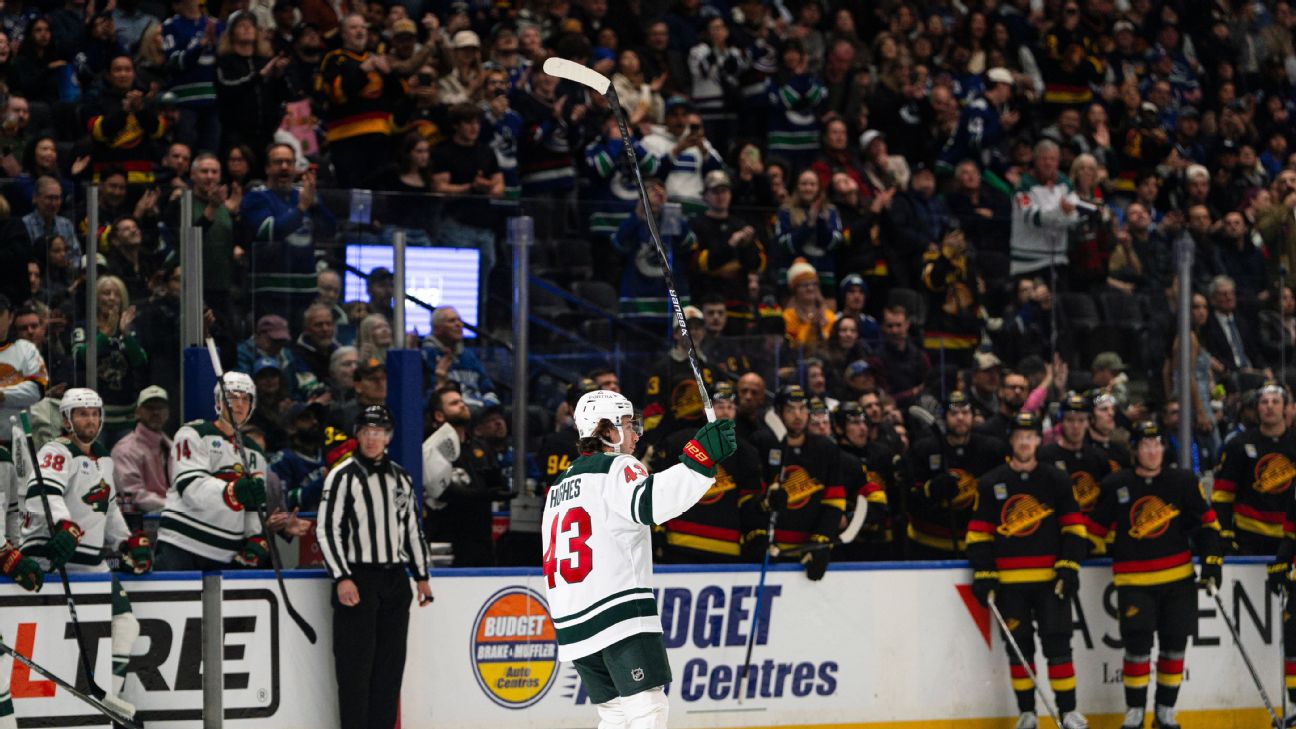
Hughes hears boos in Vancouver return with Wild
Boos echoed through Rogers Arena as Quinn Hughes, the former Canucks captain, stepped on the ice for warmups Sunday night, this time as a member of the Wild.
Wikipedia summaries are licensed CC BY-SA 4.0. Headlines and photos belong to their publishers.