Cricket Formats Explained: Test, ODI, T20 and The Hundred
Test cricket can run five days and still draw. T20 is done in three hours. Here is what separates cricket's formats and why each one exists.
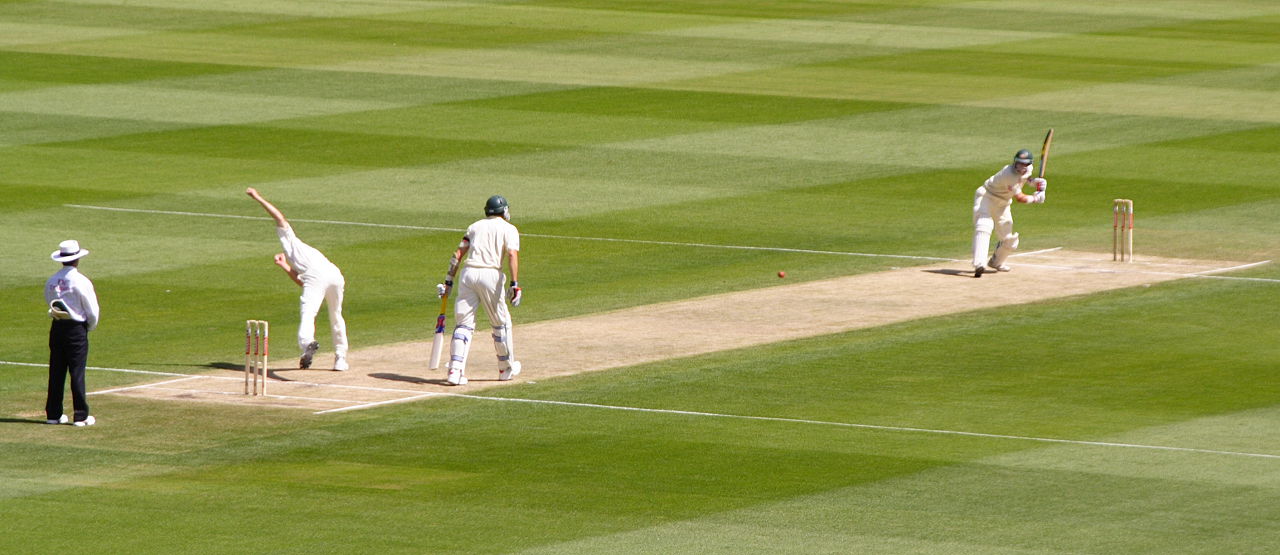
Cricket's biggest hurdle for new fans isn't the rules of batting and bowling, it's working out why the same sport can last five days or three hours depending on which one you're watching. The answer is that cricket isn't one format, it's several, each built for a different kind of contest.
Test Cricket: Up to Five Days
Test cricket is the sport's original and longest format. Each team bats two innings, and there is no limit on the number of overs a side can face, only a maximum of five days of play. Around 90 overs are scheduled per day.
Because there is no guarantee both teams complete their innings in the time available, a Test match can end in a draw, even if one side is far ahead on runs when time runs out. That possibility, and the patience required to force a result, is exactly what Test devotees love and newcomers often find hardest to grasp.

One Day Internationals (ODIs): 50 Overs a Side
The One Day International, or ODI, limits each team to 50 overs (300 balls) per innings, with the match completed in a single day, typically 7 to 8 hours including a break between innings. ODIs introduced coloured kits, a white ball and day-night matches to cricket, and they remain the format of the men's and women's Cricket World Cup.
Twenty20 (T20): 20 Overs a Side
T20 compresses the game further: 20 overs per side, finishing in roughly three hours, similar to a football match in length. The shorter format rewards aggressive batting and has produced cricket's most lucrative leagues, led by India's IPL, built almost entirely around maximising entertainment in minimum time.

Why Three (or More) Formats Exist
Each format serves a different purpose:
- Test cricket is the traditional test of skill, patience and endurance, and remains the format most players rank as the ultimate achievement.
- ODIs balance a full day's strategy and depth with a guaranteed result, and anchor the sport's global World Cup.
- T20 is built for TV, for new audiences, and for fitting a match into an evening, which has made it cricket's fastest-growing format worldwide.
England's Own Invention: The Hundred
Britain has gone a step further. The Hundred, launched by the England and Wales Cricket Board (ECB) in 2021, drops overs altogether: each side faces exactly 100 balls, bowled in blocks of five rather than the traditional six-ball over, with ends alternating every ten balls. Matches are designed to finish in around two and a half hours, and the competition runs eight city-based franchise teams, such as the Oval Invincibles and London Spirit, with simultaneous men's and women's tournaments. It is cricket stripped down specifically for a British summer evening audience that might not sit through a full T20, let alone a Test.
Results and Tie-Breakers
Test matches can end in a win, loss or draw. Limited-overs formats (ODI, T20 and The Hundred) are built to produce a winner, using tools like the Duckworth-Lewis-Stern method to recalculate targets if rain interrupts a match, and Super Overs to break ties when scores finish level.

Which One Should a New Fan Watch First?
If you want cricket's most intense, strategic contest, find a Test match, ideally against a close rival like Australia in an Ashes series. If you want an easy, fast introduction with constant boundaries and run-chases, start with a T20 or The Hundred, both built with exactly that viewer in mind.
For more cricket explainers, follow our full cricket coverage, or compare how another bat-and-ball sport scores with our guide to MLB's pitch clock rules.
More from ForTheFans
Background from Wikipedia
Cricket
Cricket is a bat-and-ball game that is played between two teams of eleven players on a field, at the centre of which is a 22-yard (20-metre; 66-foot) pitch with a wicket at each end, each comprising two bails (small sticks) balanced on three stumps. Two players from the batting team, the striker and nonstriker, stand in front of either wicket holding bats, while one player from the fielding team, the bowler, bowls the ball toward the striker's wicket from the opposite end of the pitch. The striker's goal is to hit the bowled ball with the bat and then switch places with the nonstriker, with the batting team scoring one run for each of these swaps. Runs are also scored when the ball reaches the boundary of the field or when the ball is bowled illegally.
Text from Wikipedia, CC BY-SA 4.0
Frequently Asked Questions
What is the difference between Test, ODI and T20 cricket?
Test cricket has no over limit and is played over up to five days with two innings per side. ODI limits each side to 50 overs in a single day. T20 limits each side to 20 overs and finishes in about three hours.
Can a Test match end in a draw?
Yes. If five days pass without a result, the match is a draw, even if one team is clearly ahead on runs. Limited-overs formats cannot end in a draw.
How long does a T20 cricket match last?
A T20 match usually lasts about three hours, covering 40 overs in total split between two innings of 20 overs each.
What is The Hundred?
The Hundred is an English franchise competition created by the ECB in which each side faces 100 balls rather than a fixed number of six-ball overs, aiming to finish matches in about two and a half hours.
Which cricket format is most popular?
T20 draws the biggest global audiences and the richest leagues, such as the IPL, but Test cricket is still widely regarded by players and purists as the sport's highest form.
Sources & Official Resources
Rules, schedules and statistics in this article are checked against these official sources. See our editorial policy for how we fact-check.
Join the Conversation
Got a take? Share this story and tell us what you think. We read every reply.
Keep Reading


More to Explore

Extra (cricket)
In cricket, an extra (sometimes called a sundry) is a run scored by, or awarded to, a batting team which is not credited to any individual batter. They are the runs scored by methods other than striking the ball with the bat.

Sussex appoint Barrett-Wild as first female CEO
Sussex name Beth Barrett-Wild as their next CEO with ex-England bowler Holly Colvin set to join as a non-executive director.

Wicket
In the sport of cricket, the term wicket has several meanings: It is either of the two sets of three stumps and two bails at each end of the pitch. The fielding team's players can hit the wicket with the ball in a number of ways to get a batter out.


Wicket-keeper
In cricket, the wicket-keeper is the player on the fielding side who stands behind the wicket, ready to stop deliveries that pass the batsman, and take a catch, stump the batsman out, or run out a batsman when occasion arises. The wicket-keeper is the only member of the fielding side permitted to wear gloves and external leg guards.

Prema Rawat registers fastest fifty in women's T20s
Batting at No. 4 against Hyderabad, Rawat struck six boundaries and four sixes to lift her team to 187 for 2
Laws of Cricket
The Laws of Cricket is a code that specifies the rules of the game of cricket worldwide. The earliest known code was drafted in 1744.
NCL round-up: Chattogram win a thriller; Khulna consolidate top spot
Defending champions Rangpur, meanwhile, picked up their first win of the season
Wikipedia summaries are licensed CC BY-SA 4.0. Headlines and photos belong to their publishers.