Rugby Union vs. Rugby League: The Real Differences Explained
Fifteen players or thirteen, a ruck or a play-the-ball. Here is exactly how rugby union and rugby league differ, and why the two codes split in the first place.

Tell someone unfamiliar with rugby that there are two separate sports called "rugby," and they will assume you mean one game with slightly different nicknames. In fact, rugby union and rugby league have been separate sports with separate rulebooks for well over a century, and the differences run deep.
Two Codes, One Split
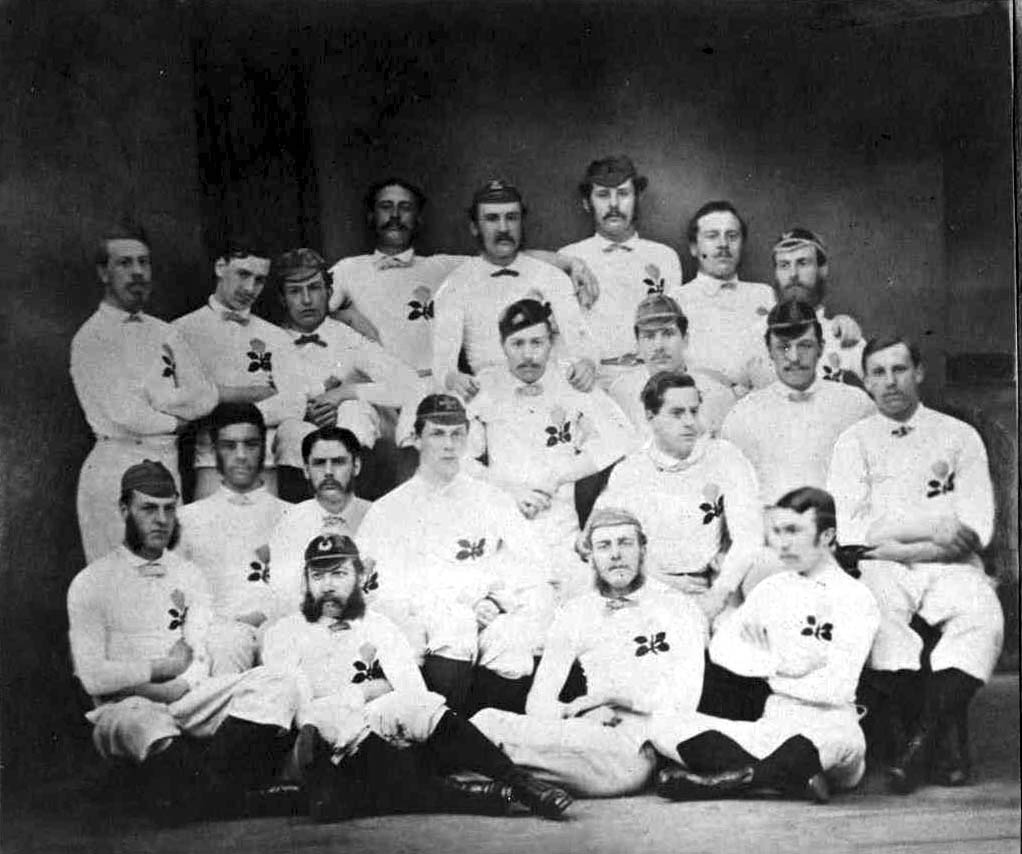
Both codes trace back to the same game, played under the Rugby Football Union from the 1870s. In 1895, a group of clubs in the north of England broke away to form their own union, now the Rugby Football League, largely in a dispute over paying players compensation for time missed at work. The original Rugby Football Union held onto amateurism for a century longer, and the two games developed separately from there.
Team Size: 15 vs. 13
The most visible difference: rugby union fields 15 players per side (8 forwards, 7 backs). Rugby league fields 13 players per side, with no distinct scrum-based forward pack in the same sense, which opens up more space and makes the game faster and more open.
The Tackle: Contest vs. Play-the-Ball
This is where the two codes diverge most sharply.
- Union: After a tackle, players from both sides can compete for the ball by binding over it, forming a ruck. Possession can change hands at almost any tackle, which is why union looks more chaotic and stoppage-heavy in open play.
- League: After a tackle, there is no contest. The tackled player gets up and performs a play-the-ball, rolling the ball backward with their foot to a teammate standing behind them. Play restarts almost instantly, which is why league feels faster and more rhythmic.
The Six-Tackle Rule
Rugby league adds a limit that union does not have: a team gets six tackles to advance the ball before it must hand possession to the opposition, similar in spirit to American football's set of downs. Rugby union has no tackle limit; a team can retain the ball indefinitely as long as it keeps winning the contact area.

Scoring Values Compared
| Score | Rugby Union | Rugby League |
|---|---|---|
| Try | 5 | 4 |
| Conversion | 2 | 2 |
| Penalty goal | 3 | 2 |
| Drop goal | 3 | 1 (2 if kicked from inside a team's own half in some competitions) |
Scrums and Set Pieces
Union uses regular, heavily contested scrums (8 forwards per side) and lineouts to restart play after the ball goes into touch. League keeps a much lighter, largely uncontested scrum and has no lineouts at all: a ball kicked into touch is simply handed to the receiving team, which keeps the game moving.
Pitch and Pace
League pitches tend to run slightly shorter than union pitches, and with fewer stoppages for scrums, rucks and mauls, a league match often features far more ball-in-play time across its 80 minutes.
Where Each Code Is Strongest in Britain
Rugby union is the dominant code across most of England, Wales and Scotland, built around club competitions like Premiership Rugby and the international Six Nations. Rugby league's heartland is the north of England, Yorkshire, Lancashire and Cumbria in particular, where Super League clubs such as Wigan, St Helens and Leeds carry deep local rivalries, alongside the dominant international game in Australia's NRL.

Which Should a New Fan Watch?
Neither is objectively better; they reward different things. Union suits fans who enjoy territorial battles, set-piece strategy and sustained pressure. League suits fans who want constant, fast-paced ball movement with fewer stoppages.
Build on the basics with our full rugby union rules guide, see how the 15-a-side code compares to gridiron in rugby vs. American football, or follow more of both codes in our rugby coverage.
More from ForTheFans
Background from Wikipedia
Rugby football
Rugby football, also known simply as rugby, is a type of football, a team sport which developed in the nineteenth century in the United Kingdom, and which later split into the modern sports of rugby union and rugby league.
Rugby football started at Rugby School in Rugby, Warwickshire, England, where the rules were first put down in written (codified) form in 1845. The School's students had been playing football, with limited ball-handling allowed, since at least the early 1820s. Forms of football in which the ball was carried and tossed date to the Middle Ages (see medieval football).
Text from Wikipedia, CC BY-SA 4.0
Frequently Asked Questions
What is the main difference between rugby union and rugby league?
Union has 15 players a side and lets teams contest every tackle through rucks and mauls. League has 13 players a side, uses a quick play-the-ball after each tackle, and limits a team to six tackles before handing over possession.
How many points is a try in each code?
A try is worth 5 points in rugby union and 4 points in rugby league. Conversions are worth 2 points in both codes.
Why did rugby split into union and league?
The codes split in 1895 when northern English clubs broke away to form their own rugby football union, chiefly over paying players for lost work time, a practice the existing union banned.
Does rugby league have scrums and lineouts?
Rugby league keeps a simplified scrum but has no lineouts at all. The ball goes out of play simply restarts with a scrum or a handover, which is one reason league moves faster.
Which code is more popular in Britain?
Union is the bigger code nationally, especially in England, Wales and Scotland. League is the dominant code in the north of England, particularly Yorkshire, Lancashire and Cumbria.
Sources & Official Resources
Rules, schedules and statistics in this article are checked against these official sources. See our editorial policy for how we fact-check.
Join the Conversation
Got a take? Share this story and tell us what you think. We read every reply.
Keep Reading


More to Explore

History of rugby union in the United States
The first recorded match between two colleges in game played in United States using rugby union code rules occurred on May 14, 1874 between Harvard University and McGill University. Predating rugby using the rugby union rules were forms of football "carrying games" with use of hands permitted (as opposed to "kicking games" where hands were not permitted) including a game between Harvard College Freshmen and Sophomores at a game played at Harvard campus in 1858.

England shine to win World Deaf Rugby Sevens title
There is success for England's teams as Wales' men and women lose out at the World Deaf Rugby Sevens Championship in Tokyo.
History of rugby union in Australia
Rugby union (rugby) has a long history in Australia, dating back to the late 1840s. The first formally established rugby rules club was the Wallaroo FC in Sydney in 1870.

RFL backs Wilkin's £30m funding plea to Burnham
The new head of English rugby league backs a call for Prime Minister Andy Burnham to approve a £30m community funding plan for the sport.

Rugby union in Australia
Rugby union (rugby) in Australia has a history of organised competition dating back to the early 1870s in Sydney with the first clubs Sydney University FC and Wallaroo FC. The New South Wales Rugby Union was founded in 1874, modeled on England's Rugby Football Union. Although traditionally most popular in Australia's rugby football strongholds of New South Wales, Queensland and the ACT, the sport is played throughout the nation.

Warrington head coach Burgess signs new deal
Warrington Wolves head coach Sam Burgess signs a new two-year deal.

Rugby league
Rugby league football, commonly known as rugby league, is a full-contact sport played by two teams of thirteen players on a rectangular field measuring 68 m (74 yd) wide and 112–122 m (122–133 yd) long with H-shaped posts at both ends. It is one of the two major codes of rugby football, the other being rugby union.

What will 'exciting' McNamara bring to Leinster?
After Noel McNamara's appointment to replace Leo Cullen at Leinster from next year, Hugo Keenan believes he is an "exciting" head coach.
Wikipedia summaries are licensed CC BY-SA 4.0. Headlines and photos belong to their publishers.